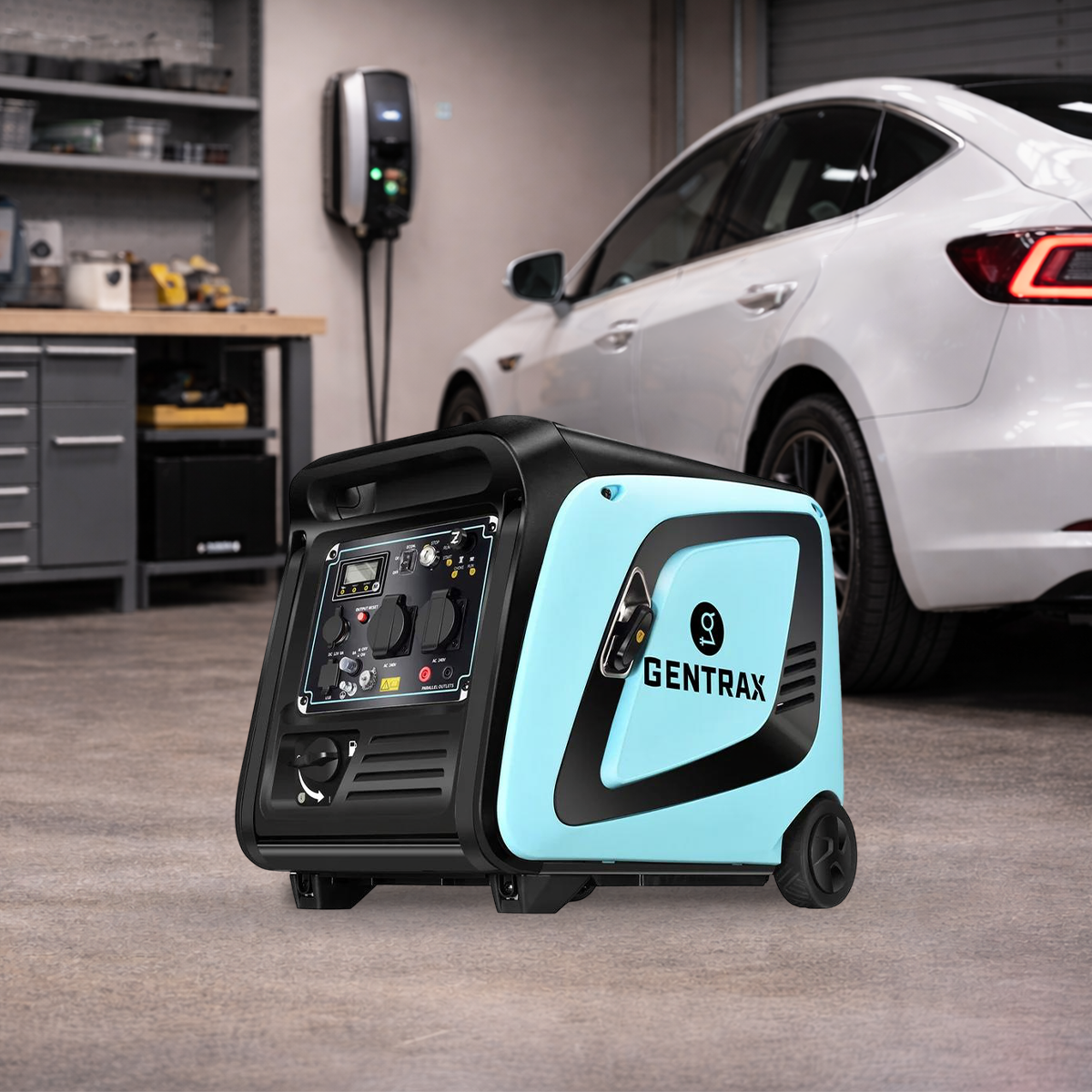
You’re driving through regional Australia, far away from the nearest charging station, and your EV battery is running low. It’s a situation more drivers are starting to think about. Yes, EV adoption is booming. But while it continues to grow, charging infrastructure in remote areas still hasn’t fully caught up.
That raises a practical question for travellers, off-grid users, and even homeowners preparing for outages: Can you charge an EV with a portable generator? The short answer is yes—but only if you’re using the right equipment and understand its limits.
Can You Charge an EV with a Portable Generator
So, can you do it? Yes, but not just with any generator.
EVs are designed to work with stable, high-quality electricity. That means they need consistent voltage, steady frequency, and clean AC output. Many standard generators simply can’t deliver this level of power quality, which is why not all setups will work.
If the power supply is unstable, the EV’s onboard charger may reject it entirely. In worst cases, poor-quality power can even damage it. So, while the concept of using a portable generator to charge EV systems is valid, success depends heavily on the type of generator being used.
What Type of Generator Works for EV Charging?
In practice, inverter generators are the only type of portable generator for EV charging that can safely and reliably get the job done.
Why Conventional Generators Don’t Work Well
Traditional generators often produce inconsistent power. Voltage can fluctuate, and the waveform is typically rough rather than smooth. For everyday tools, this might be fine, but EVs are far more sensitive.
Many EV chargers will either refuse to charge or operate inefficiently when connected to a conventional generator. There’s also a real risk of damaging internal components due to unstable input.
Why Inverter Generators Are Necessary
A pure sine wave inverter generator produces clean, stable electricity that closely matches grid power. This makes it compatible with many EV onboard chargers.
This clean output is one of the best benefits of inverter generators. They regulate voltage and frequency, ensuring a smooth and consistent output. That’s exactly what you need to charge EV from a generator without any issues.
Power Requirements
Even with the right generator type, power output matters. As a baseline, around 3 kW is required for emergency charging, but this will be slow and limited.
For practical use, a high-output inverter generator or high-power inverter generator is recommended. Higher wattage allows faster charging and better performance, especially when running EV chargers continuously.
The Gentrax Advantage
Gentrax inverter generators are designed to meet these exact requirements. As pure sine wave petrol generators, they deliver clean and stable power that suits sensitive electronics, including EV chargers.
With higher-capacity options like the GTX42000 Pro and GTX6600 models, they provide the output needed for real-world EV charging scenarios. On top of that, they are typically quieter and more efficient than traditional units, making them ideal for camping, caravanning, and off-grid use.
How Efficient Is Charging an EV with a Generator?
While it’s possible to use an EV charging portable generator, efficiency is where things get tricky.
Charging Time
Charging an EV this way is significantly slower than using grid power or dedicated charging stations. Depending on the generator size, you may only gain a small amount of driving range per hour. For example, a mid-range generator might only add a few kilometres of range after an hour of charging.
Fuel Cost
Fuel consumption is another factor. Using a gas generator for EV charging or even a diesel generator for EV charging can become costly over time. Compared to grid electricity, fuel is far less efficient as an energy source.
Energy Loss
There are also conversion losses to consider. Energy passes through multiple stages—from generator to charger to battery—and some of it is lost along the way.
Is There Another Option?
Because of these limitations, many users avoid charging their EV directly from a generator. Instead, they use a lithium battery as an intermediary to improve efficiency and stability.
Safety Considerations
When charging an EV with a portable generator, safety should be your top priority.
Unstable voltage can damage your EV’s electronics, while overloading can lead to overheating or shutdown. Poor grounding is another common issue that can affect both performance and safety.
Best Practices
If you’re planning to use a portable generator for EV charging, it’s ideal to know the best practices to help reduce risks and ensure a more reliable setup.
- Always use a pure sine wave inverter generator.
- Ensure the generator is properly grounded.
- Avoid running the generator at maximum load for extended periods.
- Use compatible charging equipment.
When Does It Actually Make Sense?
Using a portable generator for EV charging isn’t something most people will do daily, but there are situations where it makes perfect sense. In each of these cases, the generator acts as a safety net rather than a primary charging solution.
Emergencies
Emergency charging is one of the most common use cases. If you’re stranded or dealing with a temporary power outage, a generator can provide just enough charge to get you moving again.
Off-Grid Trips
It’s also useful for remote Australia EV road trips. Caravan users, campers, and 4WD enthusiasts often venture into areas where charging infrastructure is limited or non-existent. In these scenarios, a generator becomes a valuable backup.
Alternative for EV Charging in Australia
Relying solely on a generator has clear downsides. Noise, fuel costs, and low efficiency all add up, making it less practical for regular use. So, while an EV can be charged using a pure sine wave inverter generator, here’s an alternative for you:
Using a Lithium Battery as a Power Buffer
A more effective setup is to use a generator to charge a lithium battery first, then use that stored energy to charge your EV. This approach smooths out power delivery and reduces strain on the generator. It also allows for better energy management, especially when paired with solar input.
Why Lithium Battery Works Better
Lithium battery systems provide stable, clean output that’s similar to grid power. They reduce load fluctuations, improve efficiency, and can be recharged through multiple sources, including generators, solar panels, and AC power. This makes them a versatile solution for both off-grid living and emergency backup.
Gentrax Lithium Batteries
Designed for reliability and flexibility, our LiFePO4 batteries at Gentrax work seamlessly with inverter generators to create a more efficient and EV-friendly power setup. Instead of relying purely on a generator, users get a hybrid solution that balances performance, efficiency, and convenience.
Frequently Asked Questions
Can you charge an EV with a portable generator in Australia?
Yes, but only with the right setup. You need a generator that provides clean and stable power. Not all portable generators will work safely.
What type of generator is needed to charge an EV?
You need a pure sine wave inverter generator. It gives smooth and stable power that EV chargers can accept. Regular generators may not work properly.
Are inverter generators safe for EV charging?
Yes, if they are pure sine wave types. They protect the EV’s electronics by providing smooth, clean power. Always use the correct setup and avoid overloading.
How long does it take to charge an EV with a generator?
It takes much longer than normal charging. You may only gain a small range per hour. It’s mainly useful for emergency or backup use.
What’s the best setup for off-grid EV charging?
The best setup is a generator with a lithium battery system. The generator charges the battery first, then the battery charges the EV. This gives more stable and efficient power.
