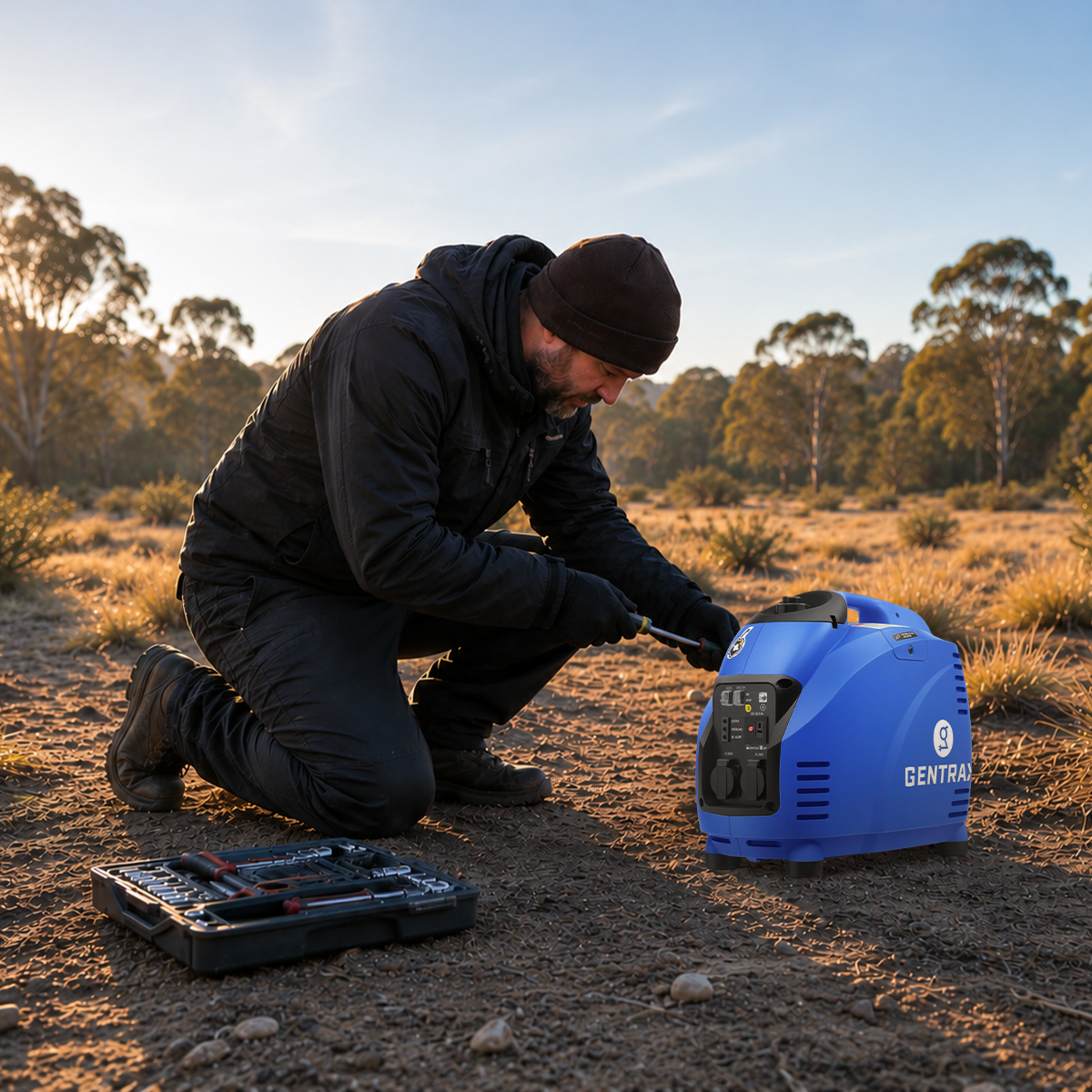
You pull the recoil cord, nothing happens. You press the electric start button, and still nothing. Whether you’re preparing for a camping trip, powering a caravan, or relying on backup power at home, few things are more frustrating than discovering your generator won’t start.
The good news is that most cases of a generator not starting aren’t caused by major engine problems. In fact, many no-start issues can be traced back to a handful of common causes that are quick and easy to check.
This practical generator-will-not-start troubleshooting guide covers everything from fuel and oil issues to spark plugs, batteries, and carburettors. By the end, you’ll either have your generator running again or know exactly what information to provide when contacting professionals.
First, Narrow It Down
Answer two simple questions:
Is the Generator Brand New?
A brand-new generator won’t start for different reasons than a generator that has been running successfully for months or years.
Is It Cranking, But Not Starting?
There’s an important difference between:
- Generator cranking but not starting – the engine turns over but won’t fire
- Generator won’t crank at all – no crank, no life
This distinction helps identify whether the issue is likely related to fuel, spark, or airflow, or whether it’s an electrical or battery problem.
If your generator is brand new, start with the next section first. If it’s not new or if the steps below don’t solve the problem, continue to the troubleshooting checklist.
Brand New Generator? Try This First
One of the most common reasons a brand-new generator won’t start has nothing to do with defects or manufacturing issues. Often, fuel simply hasn’t reached the carburettor yet.
Step 1: Fill the Fuel Tank and Wait
After adding fuel, wait at least 10 minutes before trying to start the generator. This allows fuel to flow through the system and into the carburettor. Many new generators start normally after this simple step.
Step 2: Manually Prime the Fuel System
If the generator is not turning on even after the first step, this checklist can help:
- Ensure the fuel tank is full.
- Turn the main fuel valve on.
- Disconnect the fuel hose from the carburettor.
- Allow fuel to flow through the hose.
- Reconnect the hose.
- Pull the recoil starter 10 to 20 times.
- Wait a few minutes.
- Try to start the generator again.
Still no luck? Continue with the checks below.
1. The Fuel Check
Fuel-related issues are by far the most common reason why a portable generator is not starting.
The Basics
Simple setup errors account for many cases of why a generator is not starting. Before assuming something is broken, confirm that:
- There’s fuel in the tank.
- The fuel valve is open.
- The engine switch is in the RUN position.
- The choke is ON for cold starts.
- The choke is OFF once the engine warms up.
Cold conditions add their own challenges beyond choke position. Our guide to starting your Gentrax generator in cold weather walks you through low-temperature starts.
Stale Fuel
Petrol doesn’t last forever. Fuel that’s left sitting in a generator for a long time can deteriorate, making ignition difficult or impossible. Common signs include hard starting, rough starting, and frequent stalling.
If you suspect the fuel is old, drain the fuel tank, refill it with fresh petrol, and try to start it again. Many no-start issues like this trace back to skipped upkeep. See our ultimate guide to maintaining your inverter generator for a full maintenance routine to help prevent stale fuel, clogged filters, and the like.
Test the Fuel Cap Vent
A blocked fuel cap vent can create a vacuum inside the tank and prevent fuel flow. To test it, loosen the fuel cap slightly and attempt another start.
If it starts and runs normally, the fuel cap vent may need to be replaced.
Inspect Fuel Lines
Damaged or deteriorated fuel lines can prevent proper fuel delivery. Check for any cracks, splits, leaks, or blockages. Replace damaged fuel lines before operating the generator.
2. The Oil Check
Many generator owners don’t realise that oil level can directly affect starting. Most modern generators include a low-oil protection system that prevents engine operation when oil levels fall below a safe threshold.
Check the Oil Level
Place the generator on level ground and inspect the oil level according to the owner’s manual. If required, top up with the recommended oil grade, such as 10W30 four-stroke engine oil, though always confirm the grade specified in your owner’s manual. The correct choice depends on your model and ambient temperature.
Watch Out for Slopes
Even when the oil levels are correct, a generator positioned on uneven ground can trigger the low-oil sensor. If your generator does not start, try relocating it to a flat surface and attempting another start. This simple fix surprises many owners.
3. The Spark Check
If fuel and oil aren’t the issue yet your generator still does not start, it’s time to inspect the ignition system.
Check the Spark Plug
A dirty, fouled, or wet spark plug can prevent ignition. Remove the plug and inspect for carbon buildup, excess fuel, damage and/or excessive wear.
If the plug is dirty, clean and dry it thoroughly. Reinstall and retry. If it appears damaged or heavily worn, replace it with the correct specification.
Is the Engine Flooded?
Flooding commonly occurs when the choke is left on too long. Symptoms include a strong fuel smell, a wet spark plug, and repeated failed starts.
To clear a flooded engine:
- Turn the choke off.
- Remove the spark plug.
- Pull the recoil starter a few times to help clear excess fuel.
- Allow any remaining fuel to evaporate.
- Reinstall the plug and retry after several minutes.
Check the Ignition Coil
Every small engine relies on an ignition coil to generate a spark. A faulty coil means no spark, no ignition, and no start.
If you’ve installed a new spark plug and still have no spark, the issue may lie with the ignition coil, the kill-switch wiring, or the flywheel. These should be inspected by a professional.
4. The Carburettor, Air Filter, and Connected Load
The carburettor controls the air-fuel mixture entering the engine. When blocked or contaminated, starting can become difficult. Common symptoms include hard starting, surging, rough operation, and stalling.
Cleaning the carburettor often resolves these issues. For severe contamination, professional servicing may be required.
Check the Air Filter
Engines need airflow to run properly. A clogged air filter can restrict airflow and make starting difficult. Inspect the filter, clean reusable elements, and replace heavily contaminated filters.
Disconnect All Appliances
This is an important step in portable generator troubleshooting. Starting a generator under load is a common setup mistake. Instead:
- Unplug all connected appliances.
- Reset any overload protection.
- Start the generator.
- Reconnect appliances gradually.
5. Electric Start and Battery
If your generator isn’t cranking and won’t start at all, the problem is often electrical rather than mechanical.
Check the Starter Battery
For electric-start models, a flat battery is the most common cause.
How to fix a generator not starting due to a flat battery? Diagnose it first by following these steps:
- Inspect the battery charge levels.
- Check terminal connections.
- Look for any corrosion around the battery posts.
Then recharge or replace the battery based on your findings.
Use the Recoil Starter
Many electric-start generators include a manual recoil backup. If the recoil starter works, the issue is likely related to the battery or starting circuit.
Check Switches and Wiring
Verify that the engine switch is ON, the emergency stop switch isn’t activated, and the kill-switch wiring is secure. Loose connections can prevent starting even when everything else appears normal.
Time to Call Support
Most cases of troubleshooting generator not starting can be resolved using the checks above. However, it’s time to stop DIY troubleshooting if you notice:
- Fuel leaks
- No spark after installing a new spark plug
- Repeated stalling
- Unusual engine noises
- Visible electrical damage
- Any issue involving a generator still under warranty
Every Gentrax generator is backed by warranty coverage and local support to help you get back up and running as soon as possible. When contacting support, these details can help the team diagnose the issue more quickly:
- Generator model number
- Whether it’s new or previously used
- Exact symptoms
- Troubleshooting steps that you’ve already completed
Get Back to Power Quickly
When a generator won’t start, it’s easy to assume the worst. Fortunately, most no-start situations are caused by simple issues. Start by priming your brand-new unit, if necessary, then work through the universal checklist covering fuel delivery, oil levels, ignition components, airflow, and electrical connections.
Bookmark this generator-will-not-start troubleshooting guide so it’s always available when you need it.
If you’ve completed the troubleshooting steps and you’re still scratching your head and wondering, “Why is my generator not starting?”, contact the Gentrax support team or explore the official troubleshooting resources and user manuals.
Shopping for a reliable, easy-to-maintain generator? Browse the Gentrax inverter generator range designed for Australian camping, caravanning, and backup power.
Frequently Asked Questions
Why won't my brand-new generator start even though it has fuel?
On a new unit, fuel often hasn’t reached the carburettor yet. After filling the tank, open the fuel valve and wait a few minutes before starting, or manually prime the system by briefly disconnecting the fuel hose to let petrol flow through. Most new generators start normally once fuel reaches the carburettor.
What should I check first if my generator will not start?
Start with the simple setup basics before assuming anything is broken: confirm there’s fuel in the tank, the fuel valve is open, the switch is in the RUN position, and the choke is ON for a cold start. These easy oversights cause a large share of no-start situations.
Why is my generator cranking but not starting?
If the engine turns over but won’t fire, the issue is usually fuel, spark, or airflow rather than electrical. Check for stale or low fuel, a dirty or wet spark plug, or a clogged air filter. Make sure the choke is set correctly for the engine’s temperature.
How do I test if my fuel cap is causing the problem?
A blocked cap vent can create a vacuum in the tank that stops fuel from flowing. Loosen the fuel cap slightly and try starting again; if it starts and runs normally, the vent is the culprit, and the cap should be cleaned or replaced.
Can low oil stop a generator from starting?
Yes. Most modern generators have a low-oil protection system that prevents the engine from running when oil is below a safe level.
How do I fix a generator that won't start after sitting unused?
Stale petrol is the most likely cause, since fuel deteriorates over time and becomes hard to ignite. Drain the old fuel, refill with a fresh batch, and try again. If it still won’t start, check the spark plug and carburettor, as old fuel can leave deposits that block the carburettor.
Why won't my inverter generator start with something plugged in?
Starting a generator under load is a common mistake that can prevent is from firing up. Unplug all appliances, reset any overload protection, then start the generator and reconnect your devices gradually once it’s running.
