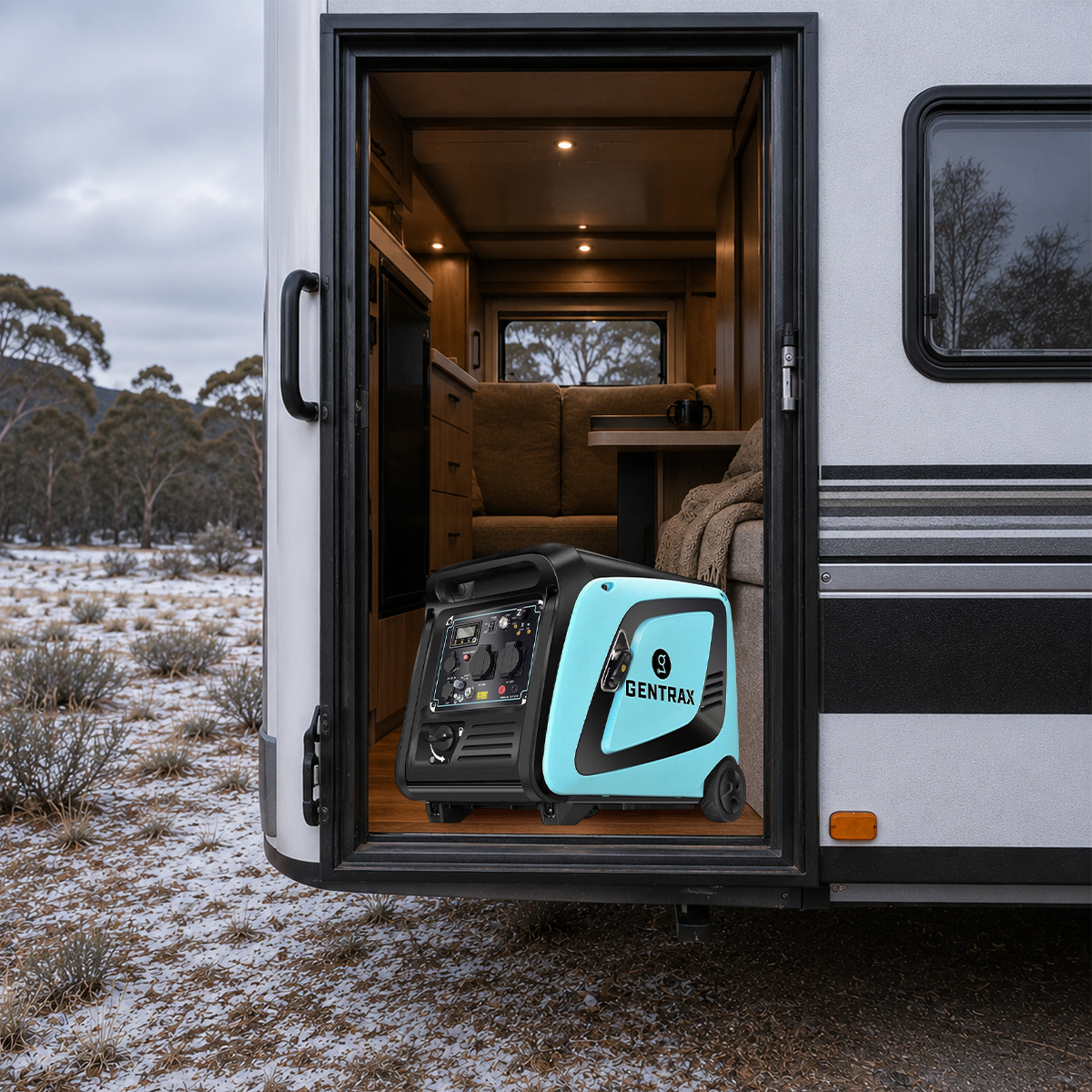
One of the most common questions among free campers is: “How much fuel does a generator use during a week-long camping trip?”
It’s an important question, especially during winter when power demand often increases. The challenge is that camping generator fuel consumption varies significantly from one setup to another.
Generator size, fuel type, runtime, appliance load, weather, and efficiency affect how much fuel you use in a week. Knowing your generator’s fuel needs helps you budget well, pack enough fuel, and avoid surprises in remote areas.
Why Generator Fuel Consumption Matters More in Winter
Winter camping demands more from your power system than summer. Shorter days and cloudy skies limit solar charging, forcing greater reliance on generators.
Cold weather pushes up electricity use with longer lighting hours and more battery charging. Campers also use extra appliances to stay comfortable on cold mornings and evenings. (Discover why a quality unit earns its place in the cold in this article.)
Fuel Planning
Fuel planning matters most in remote areas, where running out can be inconvenient, costly, and even unsafe. Campers usually rely on power for refrigeration, communications, or essential caravan systems.
Storage space is another consideration. Fuel containers take up valuable room, so it's important to estimate fuel needs accurately to avoid unnecessary weight. Fuel costs can also add up over extended winter trips, especially when generators run daily.
How Much Fuel Does a Generator Use Per Hour?
It depends on your specific load.
Fuel consumption is typically measured in litres per hour (L/h). The exact figure varies. A lightly loaded generator will consume less fuel than one operating near maximum capacity.
Light Use
For basic camping needs such as charging batteries, running LED lights, powering laptops or charging phones, many inverter generators consume approximately 0.3 to 0.6 litres per hour.
A small portable inverter generator operating for four hours per day at around 0.5 L/hour would use:
- 2 litres per day
- 14 litres over seven days
Moderate Use
Need to run a caravan fridge, charge batteries, and use kettles, coffee machines, and heating occasionally? Consumption rises to around 0.7 to 1.0 litres per hour in this scenario.
For this type of usage, a generator operating five to six hours daily could consume:
- 4 – 6 litres per day
- 28 – 42 litres per week
Heavy Use
Campers relying heavily on generator power for long periods each day can expect significantly higher fuel consumption. Examples include:
- Running multiple appliances simultaneously
- Extended battery charging sessions
- Using cooking equipment and high-wattage devices
A generator consuming 1.2 litres per hour and operating six hours daily would burn approximately:
- 9 –10 litres per day
- 65 – 70 litres per week
Important: Actual fuel consumption generator per hour figures may vary between models, load levels, and camping conditions.
Petrol and Diesel Generator Fuel Consumption Compared
Choosing between petrol and diesel generators affects both running costs and convenience.
Petrol Generators
They remain the most popular option for recreational camping. They’re typically:
- Lighter and easier to transport
- More compact
- Quieter than comparable diesel models
- Easier to store in caravans and 4WD setups
For casual camping applications, petrol generator fuel consumption is often perfectly suitable, particularly when powering smaller appliances and battery chargers.
Diesel Generators
Diesel generators are commonly used in larger off-grid setups where long operating hours are expected. Advantages include:
- Better fuel economy under heavy loads
- Longer engine lifespan
- Higher torque output
However, they’re usually heavier, louder, and less portable. Diesel generator fuel consumption only really pulls ahead when the engine is worked hard for sustained periods.
Petrol Generator Efficiency vs Diesel Generator Efficiency
For smaller camping setups with variable power demands, petrol generator efficiency is often excellent, especially with inverter models, which can adjust engine speed according to load.
For larger systems running heavy loads continuously, diesel generators can deliver lower fuel consumption and operating costs over time. For more Australian campers, however, portability, convenience, and quiet operation make petrol inverter generators the preferred choice. (Worth a read if you camp often: how inverter generators save money on long camping trips.)
What Affects Camping Generator Fuel Consumption?
Several factors influence average fuel consumption during a camping trip.
Generator Size and Rated Output
Oversized generators often waste fuel when powering only a few small appliances. A large generator operating at low load can consume more fuel than a smaller unit performing the same task.
Appliance Load and Total Wattage
The more power your appliances draw, the harder the generator must work. Running a fridge and LED lights requires far less fuel than powering kettles, microwaves, or electric heaters.
Runtime Per Day
The longer the generator runs, the more fuel it consumes. Reducing daily runtime is often the simplest way to lower fuel costs.
Eco Mode Availability
Many modern inverter generators feature Eco Mode, which automatically adjusts engine speed to match demand. This can significantly reduce portable generator fuel consumption.
Inverter Generator Technology
Inverter generator fuel consumption is often lower than that of conventional generators because inverter models only produce the power required at any given moment. The result is lower fuel use, reduced noise, and longer runtimes.
Battery Charging Habits
Poor charging practices can unnecessarily increase generator runtime. Efficient charging systems help maximise every litre of fuel.
Weather and Temperature
Cold weather can increase electricity demand, particularly when campers use additional lighting, heating support, or battery charging.
Maintenance Condition
Dirty air filters, worn spark plugs, and neglected servicing can all increase fuel consumption.
Fuel Quality
Fresh, high-quality fuel helps generators run efficiently and reliably.
Altitude and Ventilation
Higher elevations can reduce engine efficiency and slightly increase fuel use.
How to Reduce Generator Fuel Use While Free Camping
Reducing fuel consumption can save money and make camping easier. Here are some practical tips:
- Choose a generator that matches your actual power needs.
- Use an inverter generator for variable loads.
- Run appliances in batches instead of leaving the generator on continuously.
- Charge batteries efficiently during generator runtime.
- Switch to LED lighting throughout your setup.
- Avoid unnecessary use of high-wattage appliances.
- Service the generator before each trip.
- Enable Eco Mode whenever possible.
- Combine generator use with solar panels and battery storage.
- Store fuel safely and follow local camping regulations.
Even small improvements can significantly reduce your average generator fuel consumption.
Choosing the Right Generator
The right portable generator for camping can make a noticeable difference to fuel costs and convenience. Start by calculating your actual power needs. Many campers overestimate their needs and opt for generators larger than necessary.
Look for a generator with:
- Appropriate wattage output
- Good fuel efficiency
- Large fuel tank capacity
- Long runtime
- Quiet operation
- Inverter technology
- Compatibility with sensitive electronics
Noise levels are particularly important for campsites, caravan parks, and national parks where generator restrictions may apply. Comparing fuel efficiency, instead of only maximum wattage, often leads to a better camping generator in real use.
Fuel Planning Checklist for a One-Week Winter Camping Trip
Before leaving home, run through this simple checklist:
- Estimate your daily generator runtime.
- Check the generator fuel consumption litres per hour as specified by the manufacturer.
- Calculate your expected weekly fuel requirements.
- Add a safety buffer for unexpected weather or additional power needs.
- Confirm fuel storage limits and transport regulations.
- Pack approved fuel containers.
- Check engine oil levels.
- Inspect air filters.
- Check spark plugs.
- Review generator maintenance requirements.
- Plan generator operating hours responsibly.
- Consider backup charging methods such as solar panels or battery storage.
Burn Less Fuel, Stay Off-Grid Longer
A camping generator’s fuel consumption depends on several factors, including runtime, load, generator size, fuel type, and overall efficiency. The most effective approach is to estimate your daily power requirements, review your generator fuel consumption per kWh, and plan enough fuel for the entire trip plus a reasonable safety buffer.
If you're looking to maximise efficiency and reduce your operating costs, a quality inverter generator can make a significant difference. Explore the Gentrax range of portable inverter generators and find a reliable, fuel-efficient solution for your next winter free camping adventure.
Frequently Asked Questions
How much fuel will a camping generator use in one week?
It depends on your load and runtime, but a rough guide is around 14 litres for light use, 28 – 42 litres for moderate use, and 65 – 70 litres for heavy use. Check your generator’s litres-per-hour rating, multiply by your expected daily hours, and add a safety buffer.
Does cold winter weather increase camping generator fuel consumption?
Yes, mainly because winter raises your overall power demand rather than the engine itself burning more. Shorter days and cloudy skies limit solar charging, so the generator runs longer, and you’ll typically use more lighting, heating, and battery charging. More runtime means more fuel burned.
Is a diesel generator more fuel-efficient than a petrol generator?
Diesel is generally more efficient under heavy, sustained loads, which is why it suits large off-grid setups running long hours. For typical camping with smaller, variable loads, that advantage mostly disappears. Petrol inverter generators are lighter, quieter, and more practical. For most campers, petrol is the better all-round choice.
Are inverter generators more fuel-efficient for camping?
Yes, because they adjust engine speed to match the power you’re actually drawing rather than running flat out the whole time. This lowers fuel use, reduces noise, and extends runtime, especially with Eco Mode enabled. For the variable loads typical of camping, that makes them noticeably more economical than conventional generators.
What affects portable generator fuel consumption?
The biggest factors are load and daily runtime. The more power you draw and the longer it runs, the more fuel you burn. Generator size also matters, as an oversized unit running at low load can waste fuel, while Eco Mode and inverter technology can help reduce it. Maintenance conditions, fuel quality, weather, and altitude have small effects too.
How can I reduce generator fuel consumption while free camping?
Match the generator to your actual power needs, enable Eco Mode, and run appliances in batches. Pair it with solar panels and battery storage so you can charge efficiently and cut total runtime. Switching to LED lighting, avoiding high-wattage appliances, and servicing the unit before each trip all help, too.
