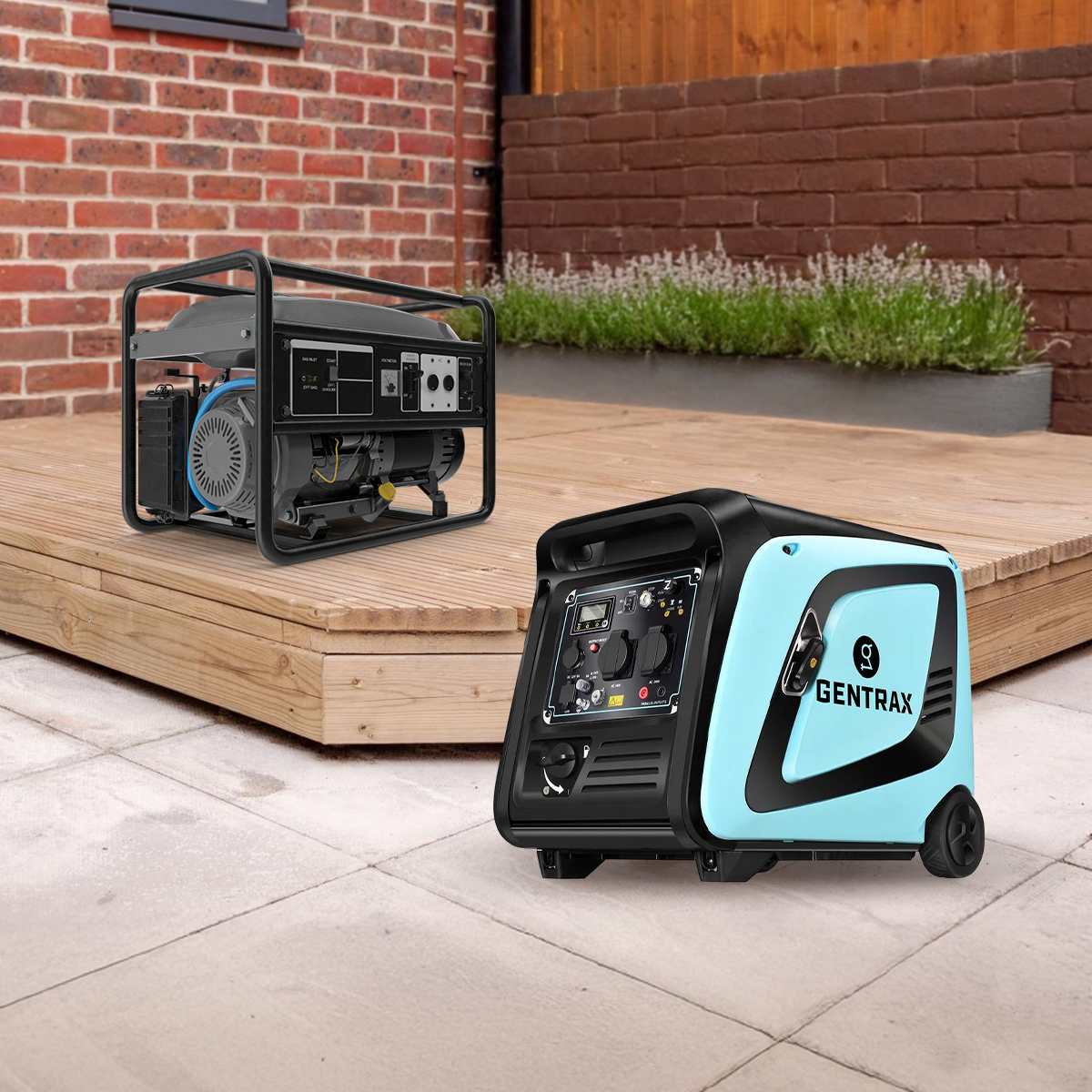
If you’re shopping for an inverter generator, you’ve probably hit the same sticking point as many first-time buyers: open-frame inverter generator vs closed frame—which one actually suits your setup? Both promise clean power and good efficiency, but real-world use in a backyard or campsite can feel very different depending on the frame design.
This guide breaks down the difference between an open and enclosed generator in simple, practical terms. It compares noise, portability, power, and price so homeowners and campers can confidently choose the right generator for backup power or outdoor use without overthinking specs.
Is an Inverter Generator?
Before comparing frames, it helps to understand what an inverter generator is and its pros and cons. Inverter generators produce stable, clean electricity that’s safe for modern electronics like laptops, phones, TVs, and battery chargers. This makes them a popular upgrade from traditional generators.
They also adjust engine speed based on load, instead of running at full throttle all the time. This reduces fuel use and noise, especially at low loads. If you want a silent generator for camping, you can’t go wrong with an inverter model.
But aside from the inverter technology, the frame design also plays a major role in how quiet, portable, and user-friendly it feels.
Open-Frame Inverter Generator
An open-frame generator uses a visible metal frame with exposed components, similar to a traditional worksite generator, but paired with inverter technology. These models are built for airflow, durability, and easy access to key parts.
The main advantage of open-frame inverter generators is value. They usually offer higher output for the price, making them appealing for users who want strong performance without a premium cost. Maintenance and inspections are also simpler, since components are easy to reach. However, because there’s little sound insulation, they tend to be louder and bulkier than enclosed designs.
This style is often a good fit for backyard use, occasional home backup power, and buyers prioritising budget. If noise isn’t a major concern, this can deliver excellent performance per dollar.
Closed Frame (Enclosed) Inverter Generator
A closed frame generator, also known as an enclosed inverter generator, houses its components inside a protective casing designed to reduce noise and vibration. This design is what many people picture when they think of a modern camping generator.
The biggest advantage of a closed-frame inverter generator is quiet operation. The enclosed structure helps absorb sound, making it more neighbour and campsite-friendly. These generators are also typically more compact, with carry handles that improve portability. The trade-off is price. Enclosed models often cost more per watt and offer less access for maintenance.
This design is ideal for camping, caravans, and backyards where noise control matters. It’s also a popular choice for anyone wanting a quiet generator for camping.
Open-Frame Inverter Generator vs Closed-Frame: Key Differences That Matter
Inverter generators are quite versatile, being useful for both home and outdoor adventures. But the question is—how do the two frame designs differ?
Noise Level
The most noticeable difference in an open-frame generator vs closed-frame comparison is sound. Open frame models are generally louder due to exposed components, while closed frame units are designed to run quieter.
Portability
Closed-frame generators are usually smaller and easier to carry, which matters for camping and frequent transport. Open-frame units may be heavier but are often easier to wheel around in a backyard.
Power Output
When comparing open-frame vs closed-frame generator designs, the difference is not in power quality. Both produce the same pure sine wave output. The key distinction is capacity.
Open frame ones are more commonly available in higher wattage ranges, making them better suited for setups that need to run multiple devices or higher-load equipment at the same time. Closed frame models typically focus on compact, lower-to-mid watt outputs, ideal for lighter loads.
Fuel Efficiency
Both types benefit from inverter technology, but closed-frame models often excel at low-load efficiency, which is common during camping or overnight use.
Durability and Accessibility
Open frame models offer easier inspection and servicing, which some homeowners prefer for long-term ownership.
Price and Value
If budget is the priority, open frame wins. If comfort, quietness, and portability matter more, a closed frame offers better everyday usability.
Noise and Comfort: Choosing a Quiet Generator for Camping
If you’re on the hunt for a camping inverter generator, you should be aware that noise affects etiquette and sleep quality among campers. In shared spaces, a loud generator can quickly become a problem.
A closed-frame inverter generator is generally the better choice for campsite use, especially for morning coffee, charging devices, running a portable fridge, or powering lights at night. Its quieter operation makes it a strong portable inverter generator for camping.
To reduce noise even further, it helps to run the generator in eco mode, avoid overloading it, place it at a safe distance away from tents, and use vibration-damping mats if possible.
Which Suits Your Backyard Setup?
Still unsure whether you should opt for an open-frame inverter generator vs a closed-frame one? Here’s a quick checklist to help you decide:
Choose an Open-Frame Inverter Generator If:
- You want the best power output for your budget
- Noise is less of a concern
- You prefer easier access for maintenance
For backyard use and occasional outages, the best open-frame inverter generators offer strong, reliable performance.
Choose a Closed-Frame Inverter Generator If:
- You live close to neighbours
- You want night-friendly backup power
- You plan to use electronics frequently
For camping and comfort-focused use, a closed-frame unit is often the better long-term choice.
Open or Closed? Choose What Fits Your Lifestyle
When it comes to the open-frame inverter generator vs closed-frame decision, the core difference is simple. Open-frame ones are powerful and budget-friendly but louder. Closed-frame units are quieter, more portable, and often better suited to camping and noise-sensitive backyards.
Both styles deliver clean inverter power. The right choice depends on how and where you plan to use it. Explore the Gentrax inverter generator range to find a model that matches your power needs, noise expectations, and outdoor lifestyle with confidence.
Frequently Asked Questions
What is the difference between an open and an enclosed generator?
An open generator has exposed parts and a metal frame, while an enclosed generator is fully covered with a protective casing. Enclosed generators are usually quieter and look more compact. Open generators are often heavier and easier to access for repairs.
Why are open-frame inverter generators quiet?
Open frame inverter generators use inverter technology that controls engine speed based on usage. This means the engine does not run at full speed all the time. Less engine strain results in lower noise compared to traditional generators.
Is a closed-frame inverter generator worth the extra money?
A closed-frame inverter generator is worth it if low noise and portability matter to you. The casing helps reduce sound and protects internal parts from dust and weather. It’s a good choice for camping, caravans, and home backup use.
Can I use an open-frame inverter generator at a campsite?
Some campsites allow open-frame inverter generators, but many have strict noise rules. Open frame models are usually louder than enclosed ones, even with inverter technology. Always check campsite rules before bringing one.
Are open-frame inverter generators more durable than closed-frame ones?
Open-frame inverter generators are often more rugged because of their strong metal frames. They handle rough use and job site conditions better. Closed-frame ones focus more on quiet operation and portability than toughness.
