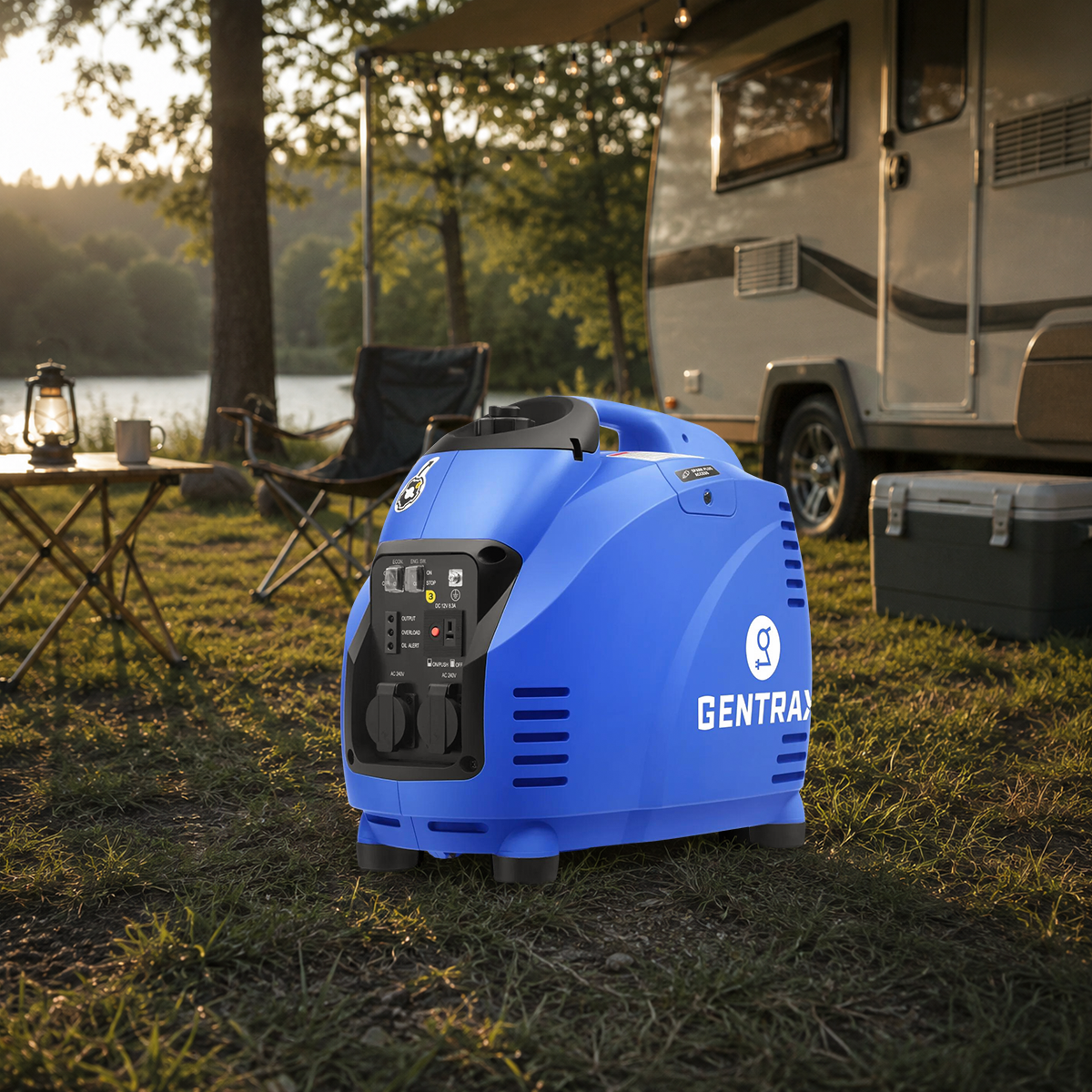
Australians usually rely on a portable power source like a generator when camping. However, a question most of us ask is, “Can you use a generator in a national park?”
Many campers assume they are either allowed everywhere or banned outright. But the answer is somewhere in between. Generator use in national parks in Australia is permitted in some campgrounds in some states, but never universally. There is no single national rule.
Why the inconsistency? Australia’s national parks aren’t managed by one federal body. Each state and territory runs its own park service under its own legislation, which creates a genuine patchwork of policies. What’s allowed at a remote Western Australian campground may be flatly prohibited at a popular Victorian coastal reserve.
This guide* cuts through that confusion. Below, you’ll find a quick state-by-state breakdown of national park generator rules for 2026, the noise limits that catch most campers out and other points to help you stay compliant.
Why Generator Rules Exist in National Parks
National parks are valued as havens of natural sound and quiet. They’re places people visit to hear the bush. Generator noise disrupts that experience and stresses native wildlife.
The concerns are real and specific. Acoustic ecology is now a recognised management priority, and many native species, particularly nocturnal and nesting animals, are acutely sensitive to mechanical noise. Fire risk from fuel and hot engine parts plus exhaust emissions also factors, especially in areas managed for ecological health.
There’s also the simple matter of courtesy: one generator running at the wrong hour can affect dozens of surrounding campers.
National Park Generator Noise Level Limits
The single most important spec for park compliance is your generator’s noise level, measured in dBA–A-weighted decibels, taken at a set distance of typically 7 metres.
The common national park generator dB level threshold is 65 dBA maximum at 7 m. To put that in context, a normal conversation sits around 60 dB. A conventional open-frame generator can roar to 75 to 85 DB, while an inverter generator typically runs at just 50 to 65 dB.
This is exactly where many campers go wrong. A standard generator brought on price or wattage alone will usually fail the 65 dBA test outright–which means it isn’t permitted in parks that enforce noise limits. The fix is a quiet inverter generator: quieter, more fuel-efficient, and built to meet park requirements.
State-by-State Generator Rules in Australian National Parks
National Park generator regulations in Australia vary by jurisdiction. Let’s discuss the known rules per state:
NSW – New South Wales
Do they allow generators in NSW national parks?
It depends on the area. Under the generator national parks rules in NSW, generators are permitted with restrictions in some designated National Parks and Wildlife Service (NPWS) campgrounds. It’s usually the more developed ones that allow generators, and only where signage or a park manager gives consent. If there’s no sign, you can’t run one without prior approval.
Be aware that “developed” doesn’t mean “allowed everywhere.” Camping in national parks NSW rules vary site by site, and well-known parks like Myall Lakes prohibit generators entirely.
Where generator use is permitted, it’s also stipulated that:
- Only one generator may be used per camping group.
- It must be located closer to your own camp, and you must take steps to minimise noise.
- Some parks have noise curfews that apply to generator use; check local signage or ask the NPWS office on arrival.
QLD – Queensland
Queensland is the strictest state. The generator national parks rules in QLD bluntly state: generators are not permitted in most Queensland parks and forests. In campgrounds where they are allowed, only low-decibel units up to 2.0 kVA, max of 65 dB at 7 m are acceptable, unless stated otherwise.
Even iconic spots like the Carnarvon Gorge and Big Bend camping area ban generators completely. Queensland publishes region-by-region generator lists (statewide, around Brisbane, Cape York, Sunshine Coast, and more) on the qld.gov.au camping pages. Check the list for your destination, because the default answer here is “no.”
VIC – Victoria
The generator national parks rules in Victoria are restrictive at Parks Victoria’s busiest sites. Tidal River at Wilsons Promontory bans generators entirely, and the Grampians is heavily restricted.
Where generators are permitted, there’s a fire-safety catch that’s easy to overlook. During the Fire Danger Period, running any non-stationary engine (like generators) requires you to keep fire-suppression equipment on hand, like a 9-litre water spray pump or fire extinguisher, plus a cleared area and constant attendance.
If your destination is a marquee coastal or alpine park, assume a ban and confirm on Parks Victoria site before you commit.
SA – South Australia
South Australia is also cautious. Generators in national parks in SA are banned in many reserves. Select areas, like Innes National Park and Coffin Bay, allow use under designated conditions, with quiet hours commonly from around 10 pm.
SA’s fire conditions also require a 4-metre cleared area around the generator (or someone in constant attendance), plus a shovel or rake and a portable water spray on hand.
For a medical exemption, South Australia handles it through the Department for Environment and Water (DEW), with six regional offices across the state. Contact them ahead of your trip with a supporting medical certificate. Also, confirm your specific park with NPWS South Australia, as bush camps frequently prohibit generators outright.
WA – Western Australia
WA is the most permissive of the mainland states. Generators can generally be used in many park and state-forest campsites, typically between 8 am and 9 pm, though some sites apply tighter windows.
Better still, several parks set aside separate generator camping areas so you can run a unit without disturbing quiet-seeking campers. Confirm site-specific hours with the DBCA/Parks and Wildlife office before departure.
TA – Tasmania
Rules in Tasmania vary from park to park. Popular parks including Mt Field and Southwest National Park do not allow generators. There’s no blanket state position, so check the Tasmania Parks and Wildlife Service site for your specific destination before you travel.
NT – Northern Territory
The Northern Territory sets generator policy per park. Some campgrounds allow them; others don’t. Because the NT runs an online booking system, the cleanest approach is to check your chosen campground’s details through the NT Parks booking portal, where generator conditions are listed alongside the site facilities.
ACT – Australian Capital Territory
Straightforward here: generators are not permitted at campgrounds in Namadgi National Park, the ACT's largest park. This includes Orroral, Honeysuckle, and Mt Clear. For any ACT national park stay, plan on a silent power source from the outset.
Tips for Staying Compliant Before You Leave Home
Run through this before the generator goes in the ute:
- Check the exact campground page, not just the park’s general policy. Rules change from site to site within the same park.
- Confirm the operating hours and dBA limit for that specific campground if generators are allowed.
- Arrange any medical exemption in advance. NSW, QLD, WA, and SA all require you to contact the park office beforehand with a medical certificate. It’s never automatic.
- Check the fire status on the day you leave. Generators are banned on Total Fire Ban days everywhere, no exceptions.
- Know the cost of getting it wrong. Breaches can mean a forced shutdown, an on-the-spot fine, or ejection from a site you waited months to book.
- Follow the rules on the day. Even if generators were allowed on the last visit, conditions may change.
- Be a considerate neighbour. Keep noise minimal and stick to permitted hours, even where generators are technically allowed.
Choosing a Compliant Generator: Why Inverter Models Win
Conventional generators fail on every count: too loud at 75–85 dB, fuel-inefficient, and heavy. A quiet inverter generator for camping is the park-appropriate choice because it offers:
- Low noise output (50 – 65 dBA) – clears the 65 dBA threshold most states enforce
- Clean, stable pure sine wave power – safe for sensitive electronics and medical devices
- Compact, lightweight design – easier to carry to remote campgrounds
- Variable load control (eco mode) – runs slower and quieter under light loads
When shopping for a portable generator for camping in Australia, check the dBA spec, fuel efficiency, weight, and parallel capability for when you need more power.
Gentrax’s range of quiet inverter generators is worth considering in this regard. The GT2000 averages around 58 dB at 7 m, and the best-selling GT3500 runs at roughly 62 dB. Both are comfortably under the common 65 dBA limit, with pure sine wave output, eco mode, and a genuinely portable design. They’re built to be low-noise and compliant wherever generators are allowed.
Know Before You Go
So, are generators allowed in national parks in Australia?
Generator national parks rules in Australia are not universal. They vary significantly by state, territory, and individual campground. They also shift with the seasons and fire conditions.
The golden rule never changes? Always check the specific campground’s rules before leaving home. A quiet inverter generator gives you the best possible chance of compliance when generators are allowed, and the peace of mind to enjoy the trip you planned.
Ready to power your next adventure the compliant way? Browse Gentrax’s range of quiet inverter generators and find the right unit for your park-ready setup.
*This guide is general in nature and current as of 2026. Park regulations change frequently. Always confirm directly with the relevant park authority before your trip.
Frequently Asked Questions
Can you use a generator in a national park in Australia?
Sometimes. It depends entirely on the state, the park, and often the individual campground. Generators are permitted in some designated campgrounds but banned in many parks and reserves, with rules varying widely across NSW, QLD, VIC, SA, WA, TAS, NT, and the ACT. Always confirm the conditions for your specific campground before you travel.
What is the noise limit for generators in Australian national parks?
Where a numeric limit applies, the common benchmark is 65 dB(A) measured at 7 metres, and in Queensland the unit must also be no more than 2.0 kVA. Outside Queensland, most states don’t publish a single sitewide cap and instead set conditions locally through signage and booking information. Aiming for a generator at or below 65 dB(A) gives you the best chance of meeting whatever local rules apply.
What hours can I run a generator in a national park?
There’s no single nationwide rule. Permitted hours are set per campground and shown on local signage or in your booking details. Many campgrounds also enforce quiet hours (often overnight) during which generators must be switched off. Check the specific park’s page or call their local office before you go.
Can I use a generator in a national park if I have a medical condition?
Often yes, even in areas where generators are otherwise banned, but you generally need a current medical certificate from a doctor stating you require the device. Queensland and South Australia both offer this exemption, and you should contact the relevant park authority in advance to arrange it. A low-noise inverter unit (at or below 65 dB(A)) is usually required.
Can I use a generator at night in a national park?
Generally, no. Most campgrounds that allow generators still prohibit them during overnight quiet hours to protect other campers and wildlife. Permitted hours are set locally, so check the signage or booking conditions for your campground. A medical exemption may allow limited night use, but only with proper approval and the required documentation.
