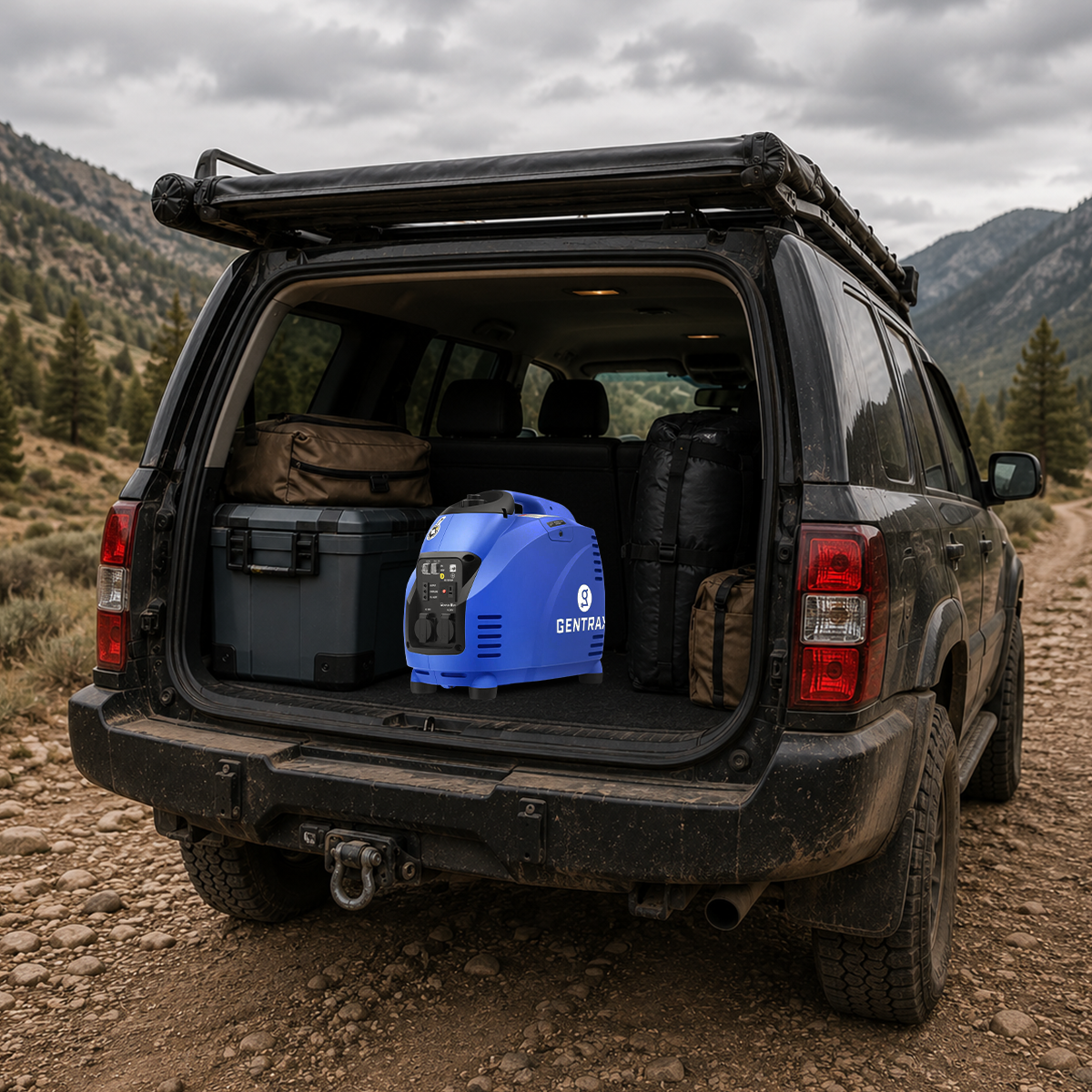
You have driven for hours to reach a spot most people will never see. The refrigerator has been running since sunrise, your phone’s battery is sitting at a dangerously low level, and the kids want lights after dark.
On a remote 4WD trip, power is not just about comfort. It affects food storage, navigation, communication, lighting, and the overall safety of your trip. A 4WD generator gives travellers a practical, independent power source when conditions do not go their way.
This guide explains when a portable generator for 4WD camping is genuinely useful, what it can power, and how to choose one that suits the way you travel.
Why Power Anxiety Is Common on 4WD Adventures
A quick overnight camp close to town might only need a charged phone and a torch. But multi-day 4WD trips through remote country? That means little to no powered campsites, limited reception, and long stretches between towns.
Think about what most travellers carry: phones, GPS units, UHF radios, cameras, a 12V camping fridge, LED camp lights, portable fans, laptops, battery packs, and small cooking appliances. Each device draws power, and together they drain a dual-battery system faster than you expect.
When power drops, communication becomes unreliable, food in the fridge starts to warm, and navigation tools go dark right when you need them. A camping power generator exists for exactly this scenario. It’s a backup for travellers who do not want to rely on a single power source alone.
What You Need to Keep Running
Rather than guessing at wattage numbers, walk through your actual camp setup and list everything that needs electricity. A portable power generator for camping becomes valuable when your battery system is low, solar input has been poor, or several devices need power at once.
Different Travellers, Different Needs
A solo camper with a swag and a phone charger has a very different load from a family running a fridge, lights, fans, and tablets. A long-distance off-grid traveller towing a camper trailer will need more. A portable light generator can cover tasks people do not always plan for, like setting up camp after dark, lighting a cooking area, or handling a roadside repair.
Clean, Stable Power
Modern camping gear is packed with sensitive electronics. Phones, laptops, drones, cameras, GPS units, lithium battery chargers, and portable fridge compressors all perform best with smooth, consistent electricity. Rough or fluctuating output can cause inefficient charging, device errors, or reduced equipment lifespan.
A pure sine wave inverter generator produces electricity that closely mirrors the clean output of mains power. In simple terms, a camping inverter generator adjusts its engine speed to match the load, delivering efficient, stable power suited to modern gear.
Compared to traditional open-frame generators, inverter models are typically lighter and more fuel-efficient, making them a better match for the equipment most campers carry today. On longer trips, that efficiency can also help reduce your overall fuel costs.
Quiet Camping Generator
After a long day on corrugated tracks, most people want the same thing from their evening: a cold drink, a warm meal, and the sound of nothing much at all. A loud generator undermines exactly the experience you drove all the way to enjoy.
No fuel-powered generator is truly silent. The term silent generator for caravan use really describes a low-noise inverter model that’s significantly quieter than older conventional generators. A well-designed quiet generator for caravan and camping use typically operates at noise levels comparable to a normal conversation on eco mode.
Factors like engine size, load, placement, distance from camp, and terrain all affect how loud a generator sounds in practice. Before taking a portable generator for camping to a campsite or caravan park, check the decibel rating and review the site’s generator rules. Being a considerate neighbour goes a long way.
Caravan Trips Often Need More Reliable Backup Power
Caravan travellers typically run a more complete electrical setup than tent-based campers. Lighting, fans, chargers, kitchen appliances, water pumps, battery systems, and entertainment devices all draw power throughout the day. A caravan generator needs to support this broader load reliably, especially on extended trips where powered sites are not always available.
A caravan inverter generator is a practical match for this kind of travel. It delivers stable output compatible with modern caravan electronics, runs quietly, and uses fuel efficiently under varying loads. Caravan owners should think carefully about wattage capacity, runtime, storage space, weight, fuel consumption, outlet types, and noise level. A generator that is too small will struggle under load, while one that is too large wastes fuel and valuable storage space.
Safe Generator Use
Generator safety is not complicated. The most important rule is ventilation; never run a generator inside a tent, vehicle, caravan, enclosed awning, or any space with restricted airflow. Carbon monoxide is odourless and extremely dangerous in confined areas. Always operate a generator outdoors, on a dry and level surface, with the exhaust directed away from sleeping areas.
Practical Safety Habits
Refuel only when the engine is off and cool. Use extension leads rated for outdoor use. Keep the generator a safe distance from where people sleep. Follow the product manual for maintenance and recommended loads, and observe local fire restrictions during high-risk seasons. Choosing the right generator size also improves safety. An overloaded unit runs hotter, works harder, and wears out faster.
Choosing a Generator That Matches Your Travel Style
The best generator is not necessarily the biggest or most expensive. It’s one that fits your travel style, power demands, and the space you have.
Weekend Campers
Portability and simple charging are usually your top priorities. A compact, lightweight unit is often enough to keep phones charged and a few lights running.
Dedicated 4WD Travellers
Heading into remote country means you need a tough and compact 4WD generator that’s reliable as backup power when other sources fall short.
Caravan Users
A quiet, stable unit with enough capacity for multiple appliances is typically the right fit for longer stays and more complete electrical setups.
Off-Grid Travellers
Those using a generator as an off-grid backup generator need solid runtime, fuel efficiency, and the kind of day-after-day dependability that keeps a remote camp running without worry.
What to Look for When Buying
A good portable generator for 4WD camping doesn’t need to do everything. It just needs to do the right things reliably. Some travellers are even exploring whether a portable generator can charge an electric vehicle on the road.
It’s ideal to compare wattage and peak output, power output quality, fuel tank size and runtime, noise levels, weight and dimensions, available outlets, portability features, and safety features such as overload shutdown and low-oil alerts.
In short, an outdoor portable generator should balance enough power for your needs, a manageable size, low noise, and straightforward operation.
Gentrax: Power You Can Count On
A reliable generator makes 4WD camping, caravan touring, and off-grid travel easier by keeping fridges cold, devices charged, lights on, and small appliances running when the grid is nowhere in sight. For many Australian travellers, a quiet inverter model offers the best balance of stable power, portability, low noise, and genuine peace of mind.
Explore our range of portable generators for 4WD camping at Gentrax and find a dependable power solution for your next camping trip, caravan holiday, or off-grid adventure.
Frequently Asked Questions
Do I really need a 4WD generator for camping?
Not always. It depends on your setup and power needs. A 4WD generator is useful for remote trips when there’s no access to power or solar isn’t enough.
What can a portable generator for 4WD camping run?
It can run essentials like camping fridge, lights, phones, laptops, and small appliances. Higher-capacity models can also handle microwaves or power tools. The exact range depends on the generator’s capacity.
Is an inverter generator better for camping?
Yes, inverter generators are generally better for camping. They’re quieter, more fuel-efficient, and produce cleaner power for sensitive electronics. Their compact size also makes them easier to transport.
Can a portable generator charge an electric car?
Yes, but it’s usually very slow and not very practical. Most portable generators don’t provide enough power for efficient EV charging. They’re better suited as an emergency top-up rather than a primary charging solution.
What size generator do I need for off-grid camping?
It depends on what you plan to run. For basic needs like lights, charging devices, and a fridge, 1 to 2 kW is often enough. For larger setups with multiple appliances, you may need 2 to 3 kW.
