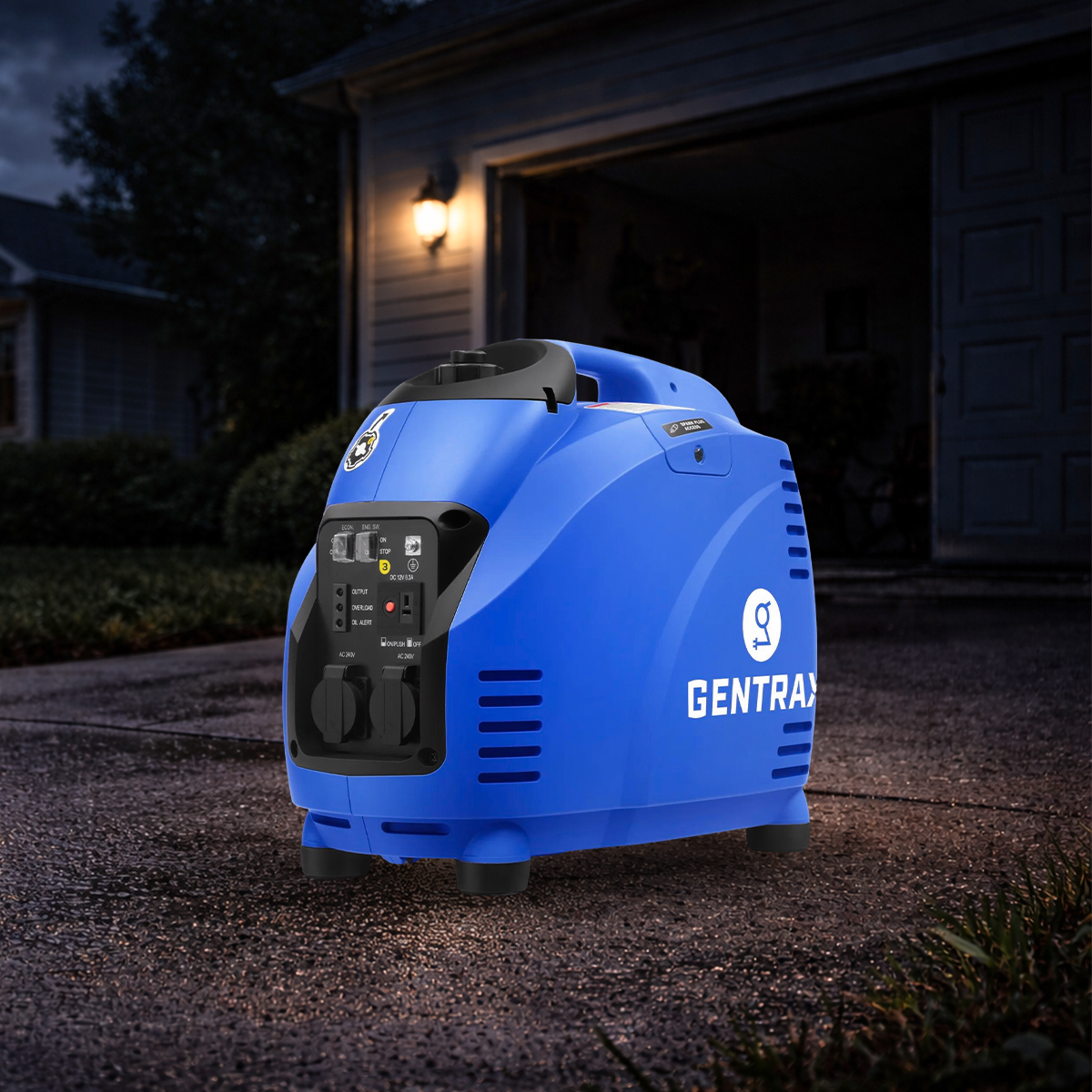
Power outages across Australia are becoming more frequent due to extreme weather, grid pressure, and infrastructure strain. To make matters worse, these blackouts can often last hours and even stretch into days depending on severity.
That’s why investing in an emergency backup generator for home use is no longer just a precaution, but a necessity. A reliable home generator for blackouts keeps food fresh, lights on, devices charged, and essential appliances running during disruptions.
That said, size is often an issue for people exploring their options. Should you choose a 2kVA inverter generator or step up to a 3kVA inverter generator? Knowing how to choose the right generator size for house backup is key to blackout survival.
Difference Between kVA and kW
When researching generators, it’s common to see some models described using kVA while others use kW. As we’re using kVA in this article, it’s important to understand the difference between the two.
These are both measurements of power, but they refer to slightly different things. In simple terms, kVA (kilovolt-amps) refers to the generator’s total power capacity. Kilowatts or kW refer to the usable power that actually runs appliances.
For smaller household generators, the difference is usually minimal. This is why a 2 kVA inverter generator is often discussed alongside a 2 kW inverter generator, and a 3 kVA inverter generator with a 3 kW inverter generator.
Why Choose an Inverter Generator for Home Backup
For modern households filled with electronics, an inverter generator offers significant advantages over traditional models. Let’s discuss it further:
Stable Power for Sensitive Electronics
Inverter technology makes clean, stable power for delicate devices like laptops, Wi-Fi routers, smart TVs, and medical equipment. Unlike conventional generators, inverter units regulate voltage electronically to prevent damaging power fluctuations.
Fuel Efficiency and Quieter Operation
A backup inverter generator adjusts engine speed based on load demand. This improves fuel efficiency and reduces noise levels. For suburban homes and renters, quieter operation makes a significant difference during extended outages.
Pure Sine Wave Power
A home backup inverter generator delivers reliable current that protects essential appliances. Fridges, CPAP machines, and communication devices run safely without risk of unstable voltage spikes.
Ideal for Emergency Situations
A generator for home power outage situations must start quickly, run efficiently, and protect electronics. An inverter generator for house backup ticks all those boxes, making it the preferred option for blackout protection.
Is a 2 kVA Inverter Generator Enough for Your Needs?
For many households, it already provides sufficient power for essential backup.
What Can It Run?
A typical 2 kVA unit can comfortably power:
- A standard household fridge
- LED lighting circuits
- Wi-Fi modem and router
- Television
- Phone and device chargers
This makes it an ideal generator size for house backup where only critical appliances need to run.
Apartments and Essential-Only Backup
A 2kVA portable generator offers practical emergency support without unnecessary bulk. It’s designed for essential-only backup rather than whole-home coverage. This makes it suitable for apartments, small homes, or rental properties.
Advantages of 2 kVA
A 2 kVA portable generator is lightweight, easy to transport, and simple to store. It’s also suitable for dual-purpose use, such as camping or caravanning, when not required for home emergencies.
Fuel Economy and Portability
Because it powers fewer appliances, it typically offers excellent fuel efficiency and extended runtime. Its compact design makes it easy to move into position during a blackout.
Gentrax 2 kVA Features
The Gentrax 2kVA generator models, like the Gentrax GT2000, have all the standard features of all Gentrax units, such as pure sine wave output and quiet operation. They are engineered for reliability and quiet performance.
Designed for residential and recreational use, the 2 to 2.5 kVA models deliver stable inverter output, efficient fuel consumption, and dependable startup during emergencies. For essential blackout coverage, this range is a practical and cost-effective solution.
When Should You Upgrade to 3 kVA–3.5 kVA?
For larger households or higher power demands, upgrading to a 3kVA inverter generator may be smarter. You could even go as far as a 3.5 kVA unit.
This size provides additional capacity to run multiple appliances simultaneously without overload.
Running Multiple Appliances at Once
A 3 kVA unit can support:
- Larger refrigerators
- Microwave ovens
- Electrics kettles
- Washing machines (short cycles)
- Multiple lighting circuits
Medical Equipment or Small Air Conditioners
If your household depends on medical equipment or small air conditioning systems, stepping up to a Gentrax generator 3.5kVA model provides added peace of mind.
Power Outages in Medium Households
For medium-sized homes, a 3 kVA inverter generator often represents the best size generator for power outage scenarios. It balances power capacity with portability and fuel efficiency.
2 kVA vs 3 kVA Inverter Generator Capacity
The key difference between 2 kVA and 3 kVA lies in simultaneous load capacity. While both are suitable home generators for power outages, the larger unit offers greater flexibility during extended blackouts.
Gentrax 3 kVA Features
The Gentrax generator 3.5 kVA models deliver robust inverter power suitable for broader home backup needs. One good example is our highly-rated Gentrax GT3500. It offers the same quiet operation and eco-mode but with more wattage capacity. This makes it ideal for families who need more than basic coverage.
Quick Comparison: 2 kVA vs 3 kVA for Blackout Survival
Choosing the right backup generator for power outage becomes easier with a side-by-side breakdown.
Power Output Comparison
- 2 kVA inverter generator: Essential appliances only
- 3 kVA inverter generator: Multiple appliances, higher surge loads
Runtime & Fuel Consumption
- 2 kVA: Longer runtime under lighter loads
- 3–3.5 kVA: Slightly higher fuel consumption, but more capacity
Portability
- 2 kVA: Lighter and easier to transport
- 3–3.5 kVA: Heavier but still portable
Noise Level
Both models operate quietly due to inverter technology, but smaller units may produce slightly lower noise under light loads.
Ideal Household Size
- 2 kVA: Apartments, small homes, renters
- 3–3.5 kVA: Medium households with higher appliance usage
Budget Considerations
A 2kVA inverter generator is typically more affordable upfront. A 3 kVA inverter generator costs more but offers increased flexibility and load capacity.
Practical Buying Recommendation
If your priority is essential survival power, a 2 kVA generator is sufficient. If comfort and multi-appliance support are important, a 3 kVA unit provides better long-term value.
Essential Blackout Survival Tips
Choosing the right portable generator for house power outages is only part of blackout preparedness.
Here are some more tips to survive blackouts:
Calculate Wattage Needs
List all appliances you plan to run simultaneously. Check their running and starting wattage requirements to determine the appropriate generator size for house backup.
Safe Generator Placement
Never operate a generator indoors or in enclosed spaces. Always position your portable generator for house power outage use outdoors, away from windows and doors.
Fuel Storage Safety
Store fuel in approved containers, away from ignition sources. Rotate fuel regularly to maintain quality.
Extension Leads & Safety Switches
Use heavy-duty, outdoor-rated extension leads. Consider a qualified electrician to install a transfer switch for safer home integration.
Routine Maintenance
Regular oil checks, spark plug inspections, and periodic test runs ensure your unit performs when needed.
Storm Season Preparation Checklist
Ensure your inverter generator for house backup works properly every time using this simple preparation checklist:
- Test your generator monthly
- Keep spare fuel safely stored
- Prepare extension leads
- Charge batteries and torches
- Secure outdoor items before storms
Choose Smart, Stay Powered
Blackouts are unpredictable, but they can be solved with thorough preparation. Selecting the correct generator size for house backup ensures safety, comfort, and peace of mind.
A 2kVA inverter generator is ideal for essential-only coverage, offering portability and efficiency. A 3kVA inverter generator or 3.5 kVA suits households needing greater flexibility and appliance capacity.
Both options provide reliable performance. The key is matching generator capacity to your lifestyle and power requirements. Be prepared before the next outage hits. Explore Gentrax’s range of inverter generators today!
Frequently Asked Questions
What size inverter generator do I need?
It depends on what you want to power. A 2 kVA generator can run small essentials like lights, a fridge, and phone chargers. If you want to run more appliances at the same time, a 3 to 3.5 kVA generator is usually a better choice.
What is the best size generator for a house during a blackout?
For most homes, a 3 to 3.5 kVA inverter generator is a good size. It can run key appliances like a fridge, lights, Wi-Fi, and small electronics during a blackout.
How long can a 2kVA inverter generator run during a blackout?
Most 2 kVA inverter generators can run for around 6 to 10 hours on a full tank, depending on the load. Running fewer appliances will help extend the runtime.
Is a 3.5kVA inverter generator enough during a blackout?
Yes, a 3.5 kVA generator is usually enough to power essential household items like a fridge, lights, a TV, and small appliances during a blackout.
Are inverter generators better for home backups?
Yes. Inverter generators are quieter, more fuel-efficient, and produce stable power that’s safe for sensitive electronics like laptops and TVs.
